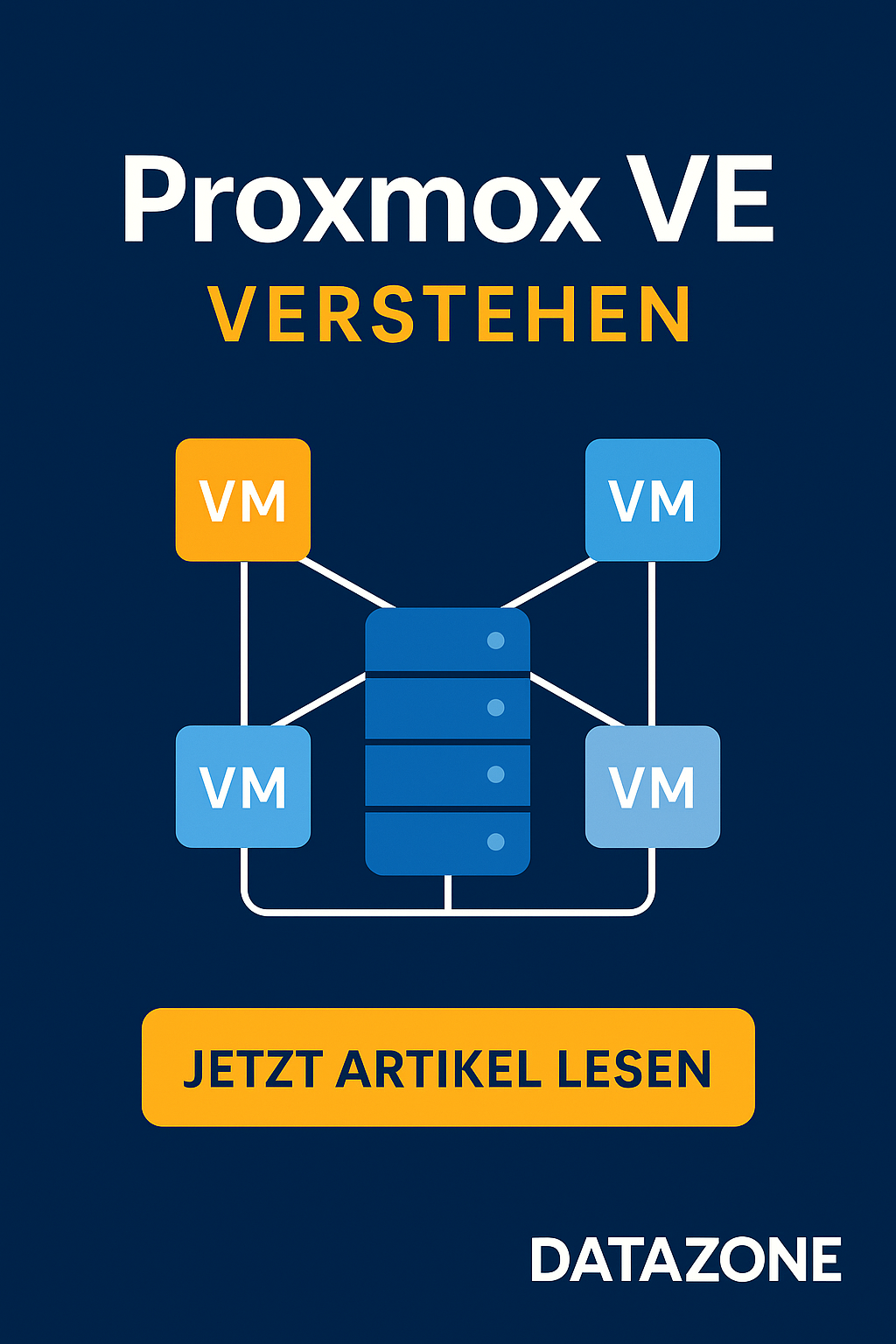
Virtualisation has long been at the core of modern IT infrastructures. Yet many organisations are looking for open, flexible, and cost-effective alternatives to proprietary virtualisation solutions. Proxmox VE (Virtual Environment) is an open-source platform based on KVM virtualisation and LXC container technology that has established itself equally in data centres, SMBs, and IT departments.
This article shows how Proxmox VE is structured, what benefits it offers, and why it is increasingly becoming a strategic platform for IT infrastructures.
1. Architecture Overview
Proxmox VE combines multiple technologies into a unified management solution:
| Component | Function | Technology |
|---|---|---|
| KVM (Kernel-based Virtual Machine) | Full virtualisation for operating systems | Linux Kernel |
| LXC (Linux Containers) | OS-level container-based virtualisation | Namespaces, Cgroups |
| Proxmox Cluster Stack (pmxcfs) | Management of multiple hosts with HA and failover | Corosync, Cluster File System |
| Proxmox Backup Server (PBS) | Deduplicated, incremental backups and snapshots | Rust-based |
| Web GUI & API | Centralised management, REST API for automation | HTML5 frontend, JSON API |
Key Features
-
Web-based management (GUI + CLI)
-
Native high availability (HA)
-
Live migration without downtime
-
Ceph storage integration
-
Rollback-capable snapshots
2. Advantages Over Proprietary Solutions
| Advantage | Description |
|---|---|
| Cost efficiency | No licence costs; support optionally available via subscription model |
| Open architecture | Transparent open-source codebase without vendor lock-in |
| Resource efficiency | Low overhead through KVM and LXC |
| Scalability | Cluster-capable from 2 to 100+ nodes |
| Flexibility | Run VMs and containers side by side |
| Community & updates | Active development, regular releases |
Proxmox VE gives organisations back control over their virtualisation strategy. SMBs in particular benefit from the combination of performance, cost savings, and transparency.
3. Cluster & Management Concept
A central concept is the Proxmox Cluster File System (pmxcfs). It replicates configuration data across all cluster nodes, making it easy to manage HA resources and perform live migrations.
Example: A three-node cluster can automatically move a VM to another host in the event of a failure. The Corosync daemon handles communication between nodes and keeps the state synchronised.
4. Use Cases
| Scenario | Benefit |
|---|---|
| SMB server consolidation | Multiple physical servers unified in a single Proxmox instance |
| Edge and branch deployments | Small, self-contained clusters at remote sites |
| Test and development environments | Rapid provisioning and cloning of VMs |
| Private cloud | Integration with Ceph, PBS, TrueNAS, Terraform possible |
5. Conclusion
Proxmox VE stands for transparency, stability, and efficiency. It is a strategic platform for organisations that want to design their virtualisation landscape with long-term independence.
Your IT, your control. With Proxmox VE, you achieve independence and efficiency in your virtualisation environment. Our experts support you with planning, migration, and operations — tailored to your organisation.
—> Request a free initial consultation now
DATAZONE supports you with implementation — contact us for a no-obligation consultation.
More on these topics:
More articles
Linux Server Hardening: 15-Minute Checklist
Ten concrete hardening steps for a freshly installed Debian, Ubuntu or Rocky Linux server — SSH, updates, firewall, auditing, sudo, limits, services, NTP, logging, kernel sysctl. With commands, doable in a quarter of an hour.
Hyper-V to Proxmox: Migration Without Data Loss
Concrete steps for migrating Hyper-V VMs to Proxmox VE: VHDX conversion, VirtIO drivers, boot modes, licence reactivation and test strategy for a smooth switch.
Backup Encryption: Key Management Done Right
Encrypted backups are useless if key management is sloppy. Symmetric vs. asymmetric, vault options, rotation, recovery scenarios and the tool-level practice for PBS, Restic and TrueNAS.