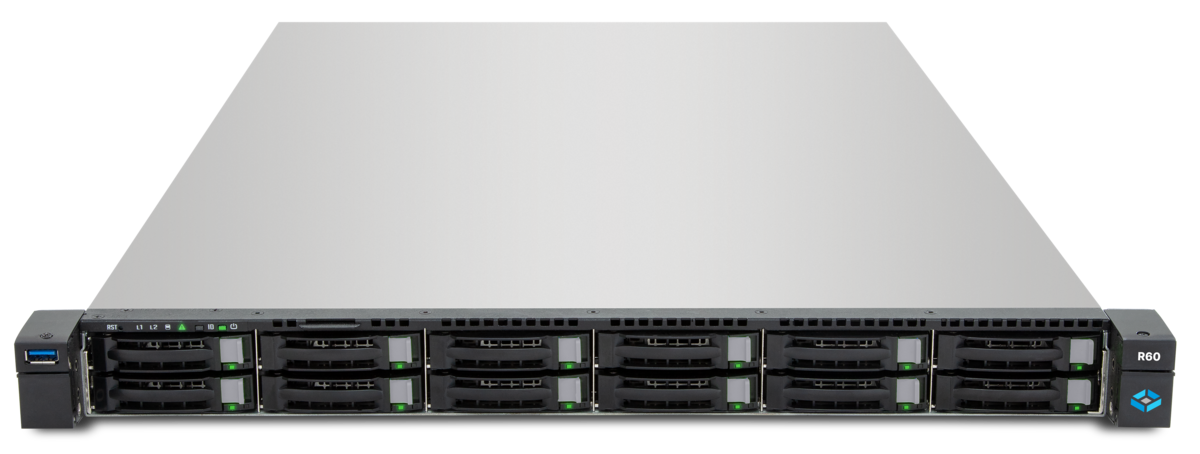
On 17 June 2026 iXsystems released the second public beta of TrueNAS 26 “Halfmoon”. Beta 1 was exactly ten weeks earlier (7 April 2026), and in that window a surprising amount has happened — although none of it is a “headline feature”. Beta 2 is a classic stabilisation release: many small bugfixes, polished WebShare workflows, a noticeably rounder ransomware detection module and visible progress on V-Series optimisation.
In early May we already published an initial assessment of Halfmoon Beta 1. This article picks up where the previous one ended: what has actually moved since Beta 1, and what does that mean for our mid-market customers?
Beta 2 in one sentence
Beta 2 brings no new features in the strict sense but hardens the Beta 1 features for the GA path. Anyone who has already tested Beta 1 can upgrade without re-creating pools; anyone touching Halfmoon for the first time now gets a notably more polished beta experience.
Bugfixes — what really hurt
The official release notes list more than 200 tickets closed between Beta 1 and Beta 2. The most relevant in our SMB context:
- SMB multichannel stability: Beta 1 had a regression bug where, under very high SMB load (several parallel multichannel sessions on the V-Series), channel binding occasionally failed and clients dropped into single-channel fallback. Beta 2 fixes this.
- NFSv4 ACL behaviour when switching from SMB to NFS access: Beta 1 incorrectly applied ACL inheritance in certain conditions. Beta 2 restores the old (correct) 25.10 behaviour.
- Replication resume after network drop: An annoying bug where replications did not auto-resume after a 30-second link-down is fixed. This required manual restarts in Beta 1.
- WebUI performance with pools containing more than 500 datasets: UI load is measurably better, the dataset tree opens faster.
- App catalog migration: Apps running under the old container stack in 25.10 now migrate cleanly to the Halfmoon app platform — Beta 1 had edge cases with volumes that required manual intervention.
These fixes sound unspectacular but are exactly the sort of problems where beta tests fail in practice. Anyone who looked at Beta 1 and shelved it because the setup felt too fragile: Beta 2 is notably smoother.
V-Series optimisation
The V-Series with tri-mode backplane is the top-end of the TrueNAS line and at the same time the platform where iX is optimising most in Halfmoon. Beta 2 brings:
- NVMe discovery logic: The logic with which Halfmoon detects front bays as SAS or NVMe is more robust. Beta 1 had edge cases with mixed populations (e.g. 12 SAS HDD plus 12 Gen4 NVMe in a V160 hybrid configuration) that led to wrong bay labels in the WebUI.
- Special VDEV migration: Anyone moving a V-Series pool from a bulk-only configuration to hybrid with Special VDEV gets a notably smoother migration in Beta 2. The workflow is better documented in the configuration assistant.
- 400 GbE multi-queue tuning: The default queue distribution for 400 GbE NICs has been reworked — NIC CPU affinity is automatically distributed by NUMA topology instead of, as in Beta 1, only on CPU0.
For customers with V-Series plans this matters because Beta 2 gives a realistic performance picture for the first time. We are currently running a test V140 under Beta 2 and see notably more stable latency profiles than under Beta 1 — we deliberately avoid quantitative claims here because iX themselves only release official performance figures at GA.
OpenZFS 2.4 — stabilisation rather than new features
The OpenZFS 2.4 branch has been bumped to a newer patch level in Beta 2. The most important changes from a mid-market perspective:
- AnyRaid edge cases with pools of more than three different drive sizes are addressed. Beta 1 had a bug where, in certain conditions, the smallest drive class was incorrectly counted into effective capacity.
- BRT (Block Reference Table) is default-active for new datasets in Beta 2 — Beta 1 still treated it as opt-in. For VM cloning and database refresh workloads this is noticeable.
- Scrub performance on large pools: scrub throughput for pools beyond 1 PB is measurably better because resource scheduling between scrub and user IO is rebalanced.
- dRAID resilver: dRAID resilver paths are more stable in Beta 2. Useful for anyone running dRAID on the M-Series or V-Series.
Important: all of this is stabilisation, not new feature flags. Pools created under Beta 1 with OpenZFS 2.4 are usable unchanged under Beta 2. But: a rollback to 25.10 (OpenZFS 2.3) remains impossible for 2.4 pools — standard ZFS behaviour, not a Halfmoon specific.
WebShare 2.0 — now close to production
In Beta 1 WebShare 2.0 was functional but half-baked in several places: full-text search took forever for the first index build, previews for office documents were inconsistent, and the audit log UI had visible gaps in filtering.
Beta 2 sorts this out:
- Incremental index build: instead of a full indexing pass on first start there is now a background indexer that spreads load over several hours. On a dataset with a few million files this is a real comfort gain.
- Office preview consistency: PowerPoint slides and Excel sheets are now rendered uniformly. Beta 1 had layout breakage in some .pptx files.
- Audit log filter: filters by user, action (download/upload/delete) and time period work cleanly now. Important for GDPR logging and NIS2 evidence.
- Permalink API: the permalink logic (links remain stable on dataset rename) is now officially documented — third-party systems can use it.
Anyone who evaluated WebShare and gave up at Beta 1 limits should take another look at Beta 2. It is not “done”, but it is usable.
Ransomware detection — status
The ransomware detection engine was one of the headline features of Beta 1. Beta 2 brings:
- Reduced false positives: Beta 1 occasionally triggered on legitimate backup tools (Veeam, Restic) because their entropy patterns resemble encryption waves. Beta 2 has a whitelist mechanism plus better heuristics. False positives are down notably in our tests without the detection becoming blunt.
- Configurable response policy: the response to a detection hit is now finer-grained. Beta 1 effectively knew only “alert” or “alert plus read-only switch”. Beta 2 can decide per dataset: alert only (for test datasets), read-only switch (for production datasets), or session kill (for sensitive datasets).
- Forensic data: on a detection event, Halfmoon now writes a more detailed forensic trace into the audit log — which files in which time window with which entropy distribution. This helps incident analysis.
Our assessment from the Beta 1 article stands: ransomware detection at the storage level is an additional layer, not a replacement for endpoint protection, immutable backups, or the 3-2-1 backup rule. But as an additional layer it is now notably more useful in Beta 2.
What is not GA-ready yet
Beta 2 is a beta. We still see topics that need to mature for the final 26.0:
- App migration edge cases: anyone with complex TrueNAS apps with custom volume mounts should still play the migration to Halfmoon through on a test system — there are still cases where migration needs manual rework.
- VMware VAAI path: NFS VAAI works, but iX visibly prioritises the Proxmox plugin. Anyone still in the VMware stack should plan more test time for the final 26 Enterprise.
- Multilingual WebUI: localisations are still patchy in Beta 2. Pure English WebUI works flawlessly.
Clear beta statement
We repeat what we already wrote in April — deliberately and without softening:
Halfmoon Beta 2 does not belong in production. Not even “just that one test dataset, what could possibly go wrong”. Beta software means:
- No iX Enterprise support SLA
- No guarantee of an upgrade path to the GA release without pool operations
- Known issues that look acceptable now may bite in edge cases
Sensible Beta 2 use cases:
- Dedicated test bench, isolated from productive storage
- Preparation for a planned hardware refresh in H2 2026 (e.g. new V-Series arriving)
- Validation of ransomware detection behaviour with real workload load
- Replication target for backup streams from production 25.10 — so the GA migration path is already practised
What we do not recommend:
- Beta 2 as primary storage for customer data
- Beta 2 for systems with Enterprise SLA relevance
- “Quick” upgrade of a stable 25.10 pool without a test run
Outlook on GA
iX traditionally have two to three beta cycles before the Enterprise GA. With Beta 2 as a stabilisation release and the typical iX cadence we expect:
- Beta 3 or release candidate: likely August/September 2026
- TrueNAS 26.0 GA (Community/Scale variant): late summer/early autumn 2026
- TrueNAS 26 Enterprise: typically two to four weeks after GA, depending on hardware validation
Firm dates come exclusively from iXsystems. We will update this article as soon as iX announce a release-candidate timeline.
DATAZONE recommendation — status June 2026
- New installations in the next 6–8 weeks: start with 25.10 Goldeye. 26 will be an in-place update later.
- Existing 25.10 installations with Enterprise support: wait for 26 Enterprise. No pressure to upgrade.
- Beta testers and hardware refresh planners: take a look at Beta 2, happy to accompany you. We currently have two test systems under Beta 2 and share observations.
- Still evaluating (Synology/QNAP to TrueNAS): evaluate with 25.10, plan 26 Enterprise as target version. Pick hardware today through the TrueNAS configurator — order to fit the GA window.
Sources and further reading
- TrueNAS release notes hub (truenas.com) — official release notes
- Our Beta 1 article — headline features in April
- OpenZFS 2.4 user update — detail assessment OpenZFS
- AnyRaid: mixed drives in one pool — Halfmoon feature in detail
Anyone planning active migration for H2 2026: please get in touch directly — we will discuss the setup, check the right GA timing and put together a vendor-neutral recommendation.
More on these topics:
More articles
TrueNAS 27 instead of 26: iXsystems renames the December release — what it means for planning and upgrade paths
iXsystems has renamed the previously-known-as TrueNAS 26 successor to 25.10 Goldeye into TrueNAS 27, just weeks before the December release. What is behind the rename, which tech base is in there (kernel 6.18, OpenZFS 2.4), when GA lands, and how the upgrade path from 25.10 realistically looks.
What Does Storage Really Cost? Cloud vs. TrueNAS Over 5 Years
Cloud storage looks cheap — until egress, API calls and 24/7 retention flip the bill. An honest 5-year TCO comparison: when on-premises TrueNAS pays off, with a worked example and configurator.
TrueNAS as an Immutable Backup Target for Veeam & Proxmox (S3 Object Lock)
Immutable backups against ransomware: how to use TrueNAS as an S3-compatible immutable target with Object Lock for Veeam and Proxmox Backup Server — on-premises, without cloud egress.